Acne Scars
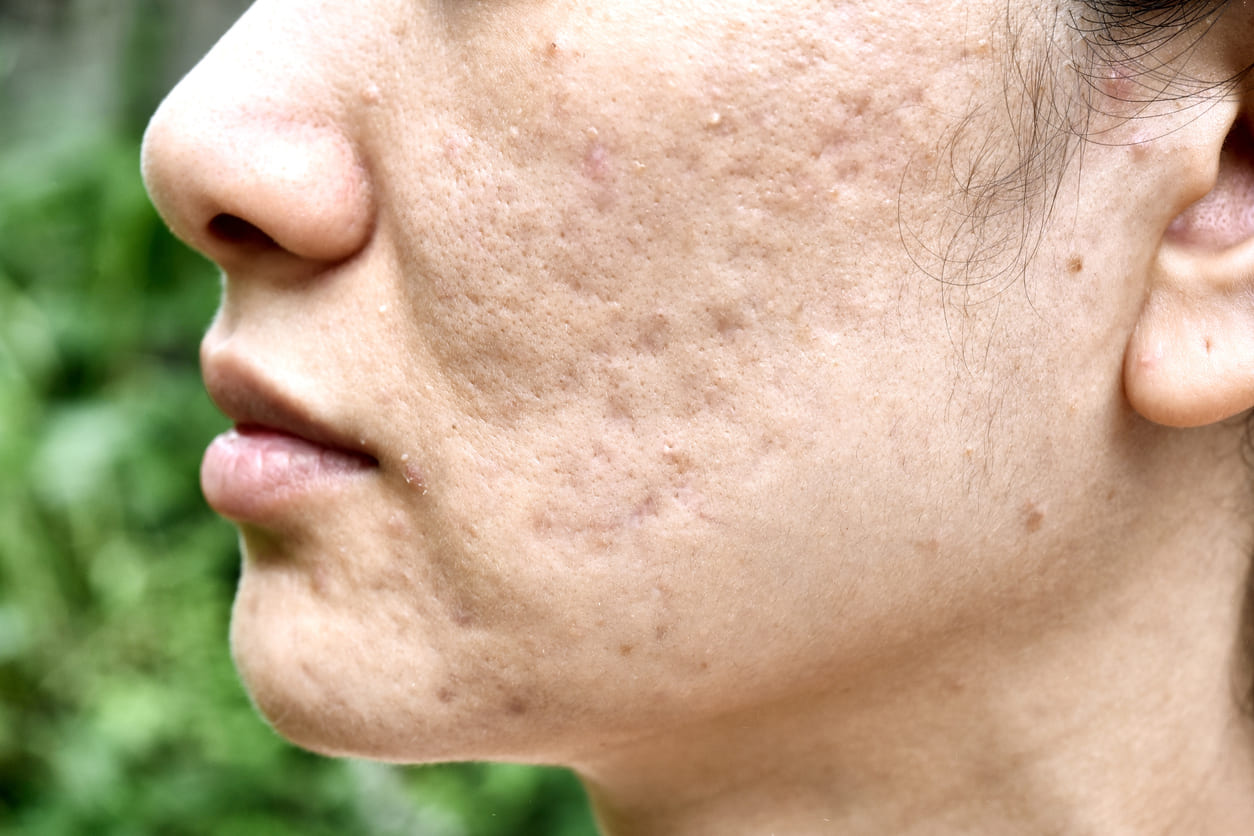
Acne scars are the marks left on the skin after acne has healed. They occur when inflamed lesions damage the skin’s tissue. The severity of scarring can vary based on the type of acne and individual skin characteristics. Acne scars can take on various forms, including atrophic scars (depressed scars), hypertrophic scars (raised scars), and discoloration, each requiring different treatment approaches.
Acne scars develop due to the following factors:
- Inflammatory Acne: Severe forms of acne, such as cystic acne, can lead to deeper tissue damage, resulting in more significant scarring.
- Picking or Squeezing: Manipulating acne lesions can exacerbate inflammation and increase the likelihood of scarring.
- Delayed Treatment: Leaving acne untreated can lead to prolonged inflammation and worsen scarring.
- Genetic Factors: Some individuals may be more prone to scarring based on their skin type and family history.
- Skin Type and Color: Darker skin tones may experience post-inflammatory hyperpigmentation, while lighter skin may develop more noticeable scars.
Symptoms of acne scars can vary depending on the type of scarring. Common signs include:
Addressing acne scars involves a comprehensive approach that considers the type and severity of the scarring, as well as the patient’s skin type and personal preferences. Effective strategies often include:
- Consultation: A thorough evaluation by a skincare professional to assess the scars and recommend appropriate treatments.
- Topical Treatments: Products containing ingredients like retinoids, alpha hydroxy acids, or vitamin C can improve skin texture and tone.
- Minimally Invasive Procedures: Treatments such as chemical peels, microneedling, or laser therapy can significantly reduce the appearance of scars.
- Surgical Options: In cases of severe scarring, surgical interventions may be considered to excise or reshape scarred tissue.
we follow a structured process for treating acne scars to ensure optimal results:
- Initial Consultation: We begin with a detailed consultation to understand your unique situation, medical history, and treatment goals.
- Customized Treatment Plan: Based on the assessment, we create a personalized treatment plan that may combine topical treatments and procedural options tailored to your skin type.
- Implementation: Our skilled professionals will perform the selected treatments, ensuring your comfort throughout the process.
- Ongoing Support: We provide continuous follow-up care, including guidance on post-treatment skincare and any necessary adjustments to the treatment plan.
- Results Monitoring: We will track your progress and make modifications as needed to ensure you achieve the best possible outcome.
Dealing with acne scars can be really tough, especially when you’re trying to put your best face forward. But you don’t have to settle for the scars as they are. At Skinesse Clinic, led by Dr. Rahuk R. Patil, who has a special interest in scar management, we offer a range of tailored treatments designed to give you smoother, more radiant skin.
What Are Acne Scars?
Acne scars are the marks left behind after an acne lesion heals. They can appear as depressions (pits) or elevations (bumps) on the skin. They’re typically categorized into four types:
- Ice Pick Scars: Tiny, deep pits.
- Boxcar Scars: Scars with sharp, defined edges.
- Rolling Scars: Scars with sloping edges, giving a wave-like appearance.
- Hypertrophic Scars: Raised, bumpy scars caused by excess scar tissue.
How to Minimize Acne Scars
Severe acne is more likely to leave scars, but even mild acne can cause scarring if you’re genetically predisposed. The key is to start treatment early to reduce inflammation and prevent scarring. Avoid picking or squeezing acne, as this can push bacteria deeper into your skin and increase the risk of scarring.
Treatment Options for Acne Scars
To effectively reduce acne scars, treatments need to reach deeper layers of the skin to stimulate new collagen growth and improve texture. Here at Skinesse Clinic, we use some of the most advanced technologies available:
Laser Acne Scar Treatment: Lasers smooth out the skin’s texture and promote collagen production, which helps improve the appearance of scars.
Microneedle Radiofrequency (MNRF): This combines microneedling with radiofrequency to target deep layers of the skin, encouraging collagen and elastin production for smoother skin.
GFC Therapy for Acne Scars: Growth Factor Concentrate (GFC) therapy uses your own growth factors to rejuvenate and repair the skin.
Subcision: This small surgical procedure breaks up thick fibrous bands of tissue that pull scars down, leading to immediate improvement in scar appearance.
TCA CROSS: Trichloroacetic Acid (TCA) CROSS is used for chemical reconstruction of deep, V-shaped ice pick scars, helping to fill them in and even out the skin.
Advanced Peeling Treatments: These peels remove damaged skin layers and reduce pigmentation, revealing fresh, smooth skin underneath.
With our advanced treatments and Dr. Patil’s expertise, we’re here to help you achieve the best possible results and restore your confidence. Feel free to reach out to us at Skinesse Clinic to explore which options might be right for you.