
Fertility Centre in PCMC
The uterus, ovaries, pelvic peritoneum, and fallopian tubes may all be operated on during endoscopic reproductive surgery to promote fertility.
Hysteroscopy and laparoscopy are included.
Hysteroscopy is a telescopic examination of the uterine cavity from the inside to diagnose and correct cavity abnormalities that interfere with normal fertility.
Laparoscopy is a minimally invasive surgical method that enables surgery at the time of diagnosis by providing a panoramic and magnified image of the pelvic organs.
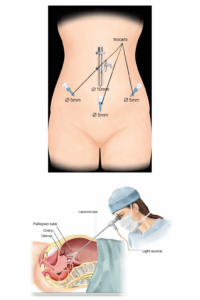
- To determine the reason for infertility and ART (IUI Treatment or IVF Treatment) failures by examining the pelvic organs
- After three failed COH and IUI procedures
- To improve ART success rates, pelvic diseases such as uterine fibroid, endometriosis, pelvic adhesions, uterine septum, polyp, and others are treated to address infertility
- Continual miscarriages as a pre-IVF screening test
- Diagnostic
- Operative
- Salpingo-ovariolysis, fimbriolplasty, tuboplasty, salpingectomy, and other laparoscopic tubal operations
- Myomectomy using laparoscopy
- Adhesiolysis, fulguration or excision of endometriotic implants, laparoscopic resection of chocolate cyst
- Post-infectious laparoscopic adhesiolysis
- Removal of adnexal masses such as benign ovarian cysts, dermoid cysts, and paraovarian cysts
- Septum incision hysteroscopically
- Polypectomy hysteroscopically
- Adhesiolysis hysteroscopically
- Lateral metroplasty hysteroscopically
- Tubal cannulation using a hysteroscope
- No overnight stay is required for the surgery
- Rapid recovery
- By the next day, patients can resume ordinary duties
- Minimal discomfort or pain
- Both diagnostic and surgical procedures can be completed in one visit
Office hysteroscopy is a type of diagnostic hysteroscopy that is conducted in an outpatient department as an OPD-based technique that does not require anesthesia.
Hysteroscopes with a diameter of 2.9 mm or 2 mm are required.
Surgical techniques such as polypectomy and adhesiolysis can be performed using office hysteroscopy.
- Uncontrolled bleeding
- Injury to surrounding organs such as the intestine, bladder, ureter, and cervix
- Injury to major blood vessels including the aorta, internal and external iliac vessels
- Infection
- Complications of anesthesia such as cardiac arrest, aspiration, and pulmonary anesthesia